

Armenian Studies at Columbia
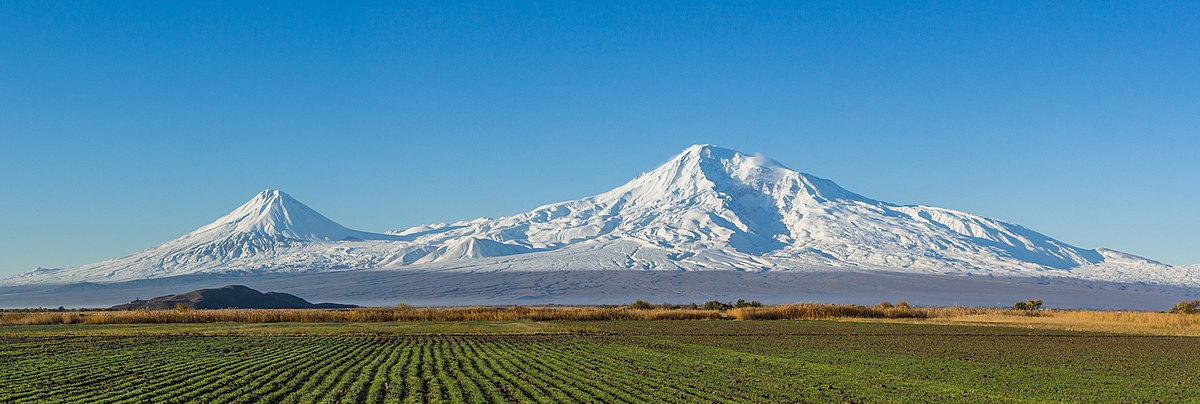
Armenian Studies has a long and celebrated history at Columbia University. This page draws together the many events and announcements related to the Armenian Studies community. If you have questions about the program, please contact Alison Vacca at av3096@columbia.edu.
- Events
- Past Events
- Minor in Armenian Studies
- Faculty
- Language
- Announcements
- Armenian Society
- Armenian Center
- Ordjanian Visiting Professor
Please check back in the Fall for events related to Armenian Studies!
2026
- Nareg Seferian, “Visual Discourse in the Conflict over Artsakh (Nagorno-Karabakh).” 6 April 2026 at 6pm, 208 Knox Hall.
- Khatchig Mouradian, book talk for The Late Ottoman Empire. 27 March 2026 from 3pm. Organized by Hamid Dabashi.
- “Founding Acts: Historical Perspectives into State Violence from the Late Ottoman Empire to the Early Turkish Republic.” 3 March 2026 from 9:45am to 4:30pm, Fayerweather Hall 413. Organized by Zeynep Ertuğrul, sponsored by the Sabancı Center, the Armenian Center, and MESAAS.
- Kate Franklin, “Relics, Ruins and Regard for the Past in Thirteenth-century Vayots Dzor.” 20 February 2026 at 6pm, 208 Knox Hall.
- Armen Abkarian, “Forging the Armenian Crown: Medieval Armenian Kingship on the Mediterranean-Eurasian Frontier.” 26 January 2026 at 6pm, 208 Knox Hall.
2025
- Ümit Kurt, “Softa and Yafta: Revisiting Power, Protests, and Massacres in the Late Ottoman Empire.” 10 November 2025 at 4:10, 807 Schermerhorn Hall. Organized by the Sabanci Center.
- Peter Balakian, Reading from his new book New York Trilogy. 27 October 2025 at 4pm, Faculty House. Organized by the Armenian Center, sponsored by NAASR and MESAAS.
- Narine Abgaryan, public reading of To Go on Living. 28 April 2025 at 5pm. Organized by Knar Abrahamyan, sponsored by the Harriman Institute, Armenian Center, MESAAS, and the Heyman Center for the Humanities.
- Nora Lessersohn, “The Sultan of New York: Ottoman Armenian Cultural Diplomacy during the American Civil War.” 31 March 2025 at 6pm, 208 Knox Hall.
- Film screening and Q&A with Sareen Hairabedian. 28 March 2025 at 4pm, 142 Uris Hall. Organized by the Armenian Society.
- Houri Berberian and Talinn Grigor, book talk about The Armenian Woman, Minoritarian Agency, and the Making of Iranian Modernity. 24 March 2025, 208 Knox Hall.
- Paul Haidostian, “Education, Peace, and the Bridge-Building Role of Middle East Christianity: A Contemporary and Critical Perspective.” 3 March 2025 at 4pm, Faculty House. Organized by Khatchig Mouradian, sponsored by the Armenian Center, AMAA, Calouste Gulbenkian Foundation, NAASR, and Haigazian University.
- Nzhdeh Yeranyan, “The Armenian-Azerbaijani Conflict: Challenges in Preserving Cultural Heritage.” 10 February 2025 at 6pm, 208 Knox Hall.
2024
- Christopher Atamian, “Trashland.” 12 April 2024 at 5:30pm, 208 Knox Hall. Organized by the Armenian Society.
- Zaroui Pogossian and Sergio La Porta, “Saints, Monasteries, Social Practices: Armenia during the Seljuk and Mongol Periods.” 25 March 2024 at 2:10pm, 207 Knox.
2023
- “Artsakh: Loss, Trauma, and Restoration.” 11 November 2023, 9:30am to 5pm. Columbia School of Social Work, 1255 Amsterdam Ave. Organized by the Armenian Center and Columbia School of Social Work; co-sponsored by the Institute for the Study of Human Rights, and MESAAS.
- Christina Maranci, “The Return of the Kingdom: The Armenian Capital of Ani, c. 1000.” 10 November 2023 at 7pm, Low Library Rotunda. Organized by the Armenian Center, sponsored by NAASR.
- Emilio Bonfiglio, “Armenian Palimpsests before the First Millennium: Material Evidence for Translations from Greek and Early Original Armenian Writings.” 20 October 2023 at 4:10pm, 208 Knox Hall.
- Hans-Lukas Kieser, Seyhan Bayraktar, and Khatchig Mouradian, “After the Ottomans.” 23 September 2023 at 6pm, School of Social Work, 1255 Amsterdam Ave. Organized by Khatchig Mouradian.
- Elyse Semerdjian, book talk about 11 September 2023 at 6:10pm, 509 Knox.
- Unsettling the Union: An Interdisciplinary Symposium. 14 April 2023 from 9am to 8pm. Organized by Knar Abrahamyan
- Aram Mrjoian, Chris Bohjalian, Nancy Kricorian, Scout Tufankjian and Hrag Vartanian, We Are All Armenian. 3 April 2023 at 7pm. Organized by Khatchig Mouradian.
- Janet Klein, Ümit Kurt, Amy Austin Holmes, Khachatur Stepanyan, “Armenians, Kurds, and the Early Turkish Republic.” 13 February 2023. Organized and moderated by Khatchig Mouradian.
The minor in Armenian Studies introduces students to Armenian history, language, and culture. Students who are interested in pursuing the minor should consult with Dr. Alison Vacca (av3096@columbia.edu).
Requirements: Five total courses
- MDES3335 Introduction to Armenian Studies
The required course is Introduction to Armenian Studies, which provides a broad overview of the field from the ancient period until today focusing on political, art, and literary history.
-
MDES 1301 Elementary Armenian I (4 points) and MDES 1023 Elementary Armenian 2 (4 points).
Students who test out of Elementary Armenian are encouraged to continue with additional Armenian language courses, but can take any four approved electives, in addition to MDES 3335, to fulfill the minor requirements.
-
2 electives, whether in Armenian language or in Armenian-related topics.
Potential electives in Armenian language include MDES2301 Intermediate Armenian I; MDES2303 Intermediate Armenian II; MDES4310 Advanced Armenian I; and MDES4311 Advanced Armenian II.
Topical courses related to Armenian Studies include MDES3331 Urban Space and Conflict in the Middle East; MDES4357 War, Genocide, and Aftermath; MDES4349 War, Internment, and Incarceration; MDES4942 Familiar and Foreign: Armenians, Kurds, and Turks in Premodern Anatolia; and MDES4953 The Ottoman Empire.
Please consult the latest course listings here.
Knar Abrahamyan
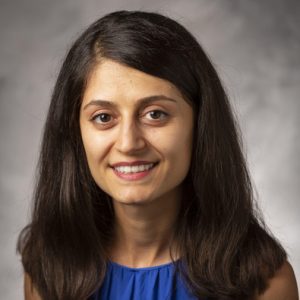
Knar Abrahamyan (Ph.D., Music Theory, Yale University) is a post-doctoral fellow at Columbia’s Society of Fellows for the 2022-3 academic year, after which she will join the Department of Music as Assistant Professor in Music Theory and Race. Dr. Abrahamyan is a music scholar whose work examines the historical and political entanglements of cultural production. Her book project, Opera as Statecraft in Soviet Armenia and Kazakhstan, re-envisions Soviet music history by analyzing the power dynamics between the state and its ethnic and racial Others. It explores opera as a contested imperial space through which the Soviet state pursued colonial subjugation under the guise of cultural modernization. Dr. Abrahamyan has presented at major national and international conferences, and her work on Soviet music and politics appeared in the DSCH Journal and a collected volume, Analytical Approaches to 20th-Century Russian Music.
Charry Karamanoukian
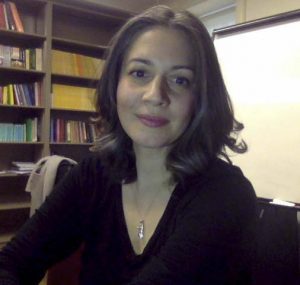 Charry Karamanoukian is Lecturer of Armenian language in the Department of Middle Eastern, South Asian, and African Studies.
Contact: ck2444@columbia.edu
Khatchig Mouradian
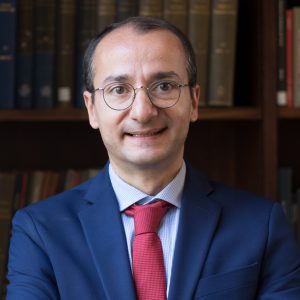
Khatchig Mouradian is a lecturer in Middle Eastern, South Asian, and African Studies at Columbia University, and the Armenian and Georgian Area Specialist at the Library of Congress. He serves as Co-Principal Investigator of the project on Armenian Genocide Denial at the Global Institute for Advanced Studies, New York University.
Dr. Mouradian is the author of The Resistance Network: The Armenian Genocide and Humanitarianism in Ottoman Syria, 1915-1918, which received the Syrian Studies Association “Honourable Mention 2021.” He is the co-editor of two forthcoming volumes on Ottoman and Middle Eastern History: After the Ottomans: Genocide’s Long Shadow and Armenian Resilience and The I.B.Tauris Handbook of the Late Ottoman Empire: History and Legacy. Dr. Mouradian has also published articles and book chapters on civil war and ethnic cleansing, concentration camps, unarmed resistance, the aftermath of mass violence, midwifery in the Middle East, and approaches to teaching history. He is the editor of the peer-reviewed journal The Armenian Review.
Contact: km3253@columbia.edu
Alison Vacca
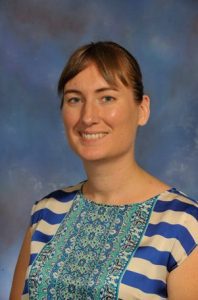 Alison Vacca is Gevork M. Avedissian Associate Professor of Armenian History and Civilization in the department of Middle Eastern, South Asian, and African Studies. Her work explores Armenia in the early Islamic period, focusing in particular on the relationship between Armenian and Arabic sources. Her publications habitually interrogate the edges of academic disciplines and set Armenians as active participants in Islamic, Eastern Roman, and Caucasian histories.
Dr. Vacca’s first monograph, Non-Muslim Provinces under early Islam: Islamic Rule and Iranian Legitimacy in Armenia and Caucasian Albania, was published by Cambridge University Press in 2017 and received the 2018 prize from the Central Eurasian Studies Society. Along with Sergio La Porta, she also published An Armenian Futūḥ Narrative through the Institute for the Study of Ancient Cultures of the University of Chicago in 2024. It received two book prizes: the 2025 book award for the Best Edition and Translation from the Mediterranean Studies Seminar and the 2025 Dr. Sona Aronian Book Prize for Excellence in Armenian Studies. Her second monograph, Acentric Histories of the Medieval World, is under contract with Oxford University Press.
In addition to her research agenda, Dr. Vacca edits al-ʿUṣūr al-Wusṭā, the open-access, peer-reviewed journal of the Middle East Medievalists.
Contact: av3096@columbia.edu
Courses in Armenian will fulfill the language requirement at Columbia. Please check the Columbia Directory of Classes for the latest information on Armenian language classes. Undergraduate and graduate students interested in learning Armenian should check here to learn about FLAS fellowships.
The Armenian language program is designed to introduce students to the Armenian world and culture as we know it today. With a vibrant Diaspora and an expanding, flourishing nation ranked country of the year in 2018 by the Economist, Armenia is the gateway to endless opportunities.
The Armenian language program offers four levels of instruction:
Elementary Armenian I (MDES 1301) and II (MDES 1302)
In Elementary Armenian I and II, students acquire the skills to communicate about topics relating to themselves and their immediate surroundings. They read authentic materials such as signs, advertisements, timetables, and texts in the form of tales, fables, and songs in unaltered original language.
Intermediate Armenian I (MDES 2301) and II (MDES 2302)
In Intermediate Armenian I and II, students acquire the skills needed to communicate about a wide range of topics relating to the world beyond their immediate surroundings. Topics include biography, geography, travel, holidays, education, health, arts, etc. At this level, students deepen their knowledge of grammar and begin to read full-length authentic short stories, excerpts from plays, newspaper headlines, and selected passages in newspaper articles in unaltered original language.
Armenian for Heritage Speakers (MDES 1309)
The Heritage course is designed for learners who have a background in Armenian, it combines the content of the elementary and intermediate levels.
Advanced Armenian I and Advanced Armenian II (MDES 4310)
In Advanced Armenian I and II, students develop competence to communicate on topics relating to social, historical, political, and cultural issues of importance to the Armenian society and the Armenian Diaspora. They perfect their knowledge of grammar and write short essays using complex forms of the language. They read longer literary works with the use of a dictionary.
Said and Done Podcast from Columbia’s Language Resource Center
Sato Moughalian and Ryan Nazari, both Ph.D. students enrolled in Armenian classes at Columbia, speak about their experiences and reasons for learning the language. They discuss the complex background of Armenian, which forms its own distinct, independent branch within the Indo-European language family. They also detail how their own personal and family stories intertwine with histories of genocide, forced migration, music, art, ceramics, weaving, and what it means to be Armenian today.
The music featured on this episode is from the Perspectives Ensemble’s album Oror/Lullaby: Armenian Music for Flute and Harp, featuring Sato Moughalian and Alyssa Reit
Said & Done is the Columbia Language Resource Center podcast, exploring how we learn, teach, and live through language.
Khatchig Mouradian Receives Richard G. Hovannisian Higher Educator Award
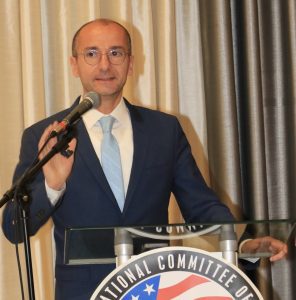 Prof. Khatchig Mouradian received the 2023 Richard G. Hovannisian Higher Educator Award at the Armenian Genocide Education Awards Luncheon held in Los Angeles on March 25, 2023.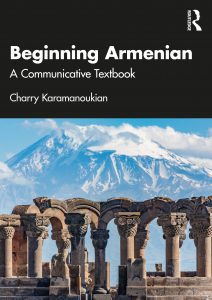
Beginning Armenian: A Communicative Textbook introduces conversational Western and Eastern Armenian in a single volume, allowing learners to acquire the language skills they need to communicate and to reference, contrast, and compare both standards of the language.
This book contains 24 lessons, each providing a range of key vocabulary and addressing different topics of daily life, including greetings, people, and objects, as well as past and future plans. An overview of the Western and Eastern Armenian alphabet, pronunciation, and punctuation is complimented by a range of exercises introducing the basics of Armenian grammar and vocabulary, with interactive information gap and role play activities designed to develop essential conversation skills.
“This is a wonderful textbook where Eastern Armenian and Western Armenian are presented together alongside English translations and transliterations, enabling learners with diverse language backgrounds to study the Armenian language comprehensively with ease and fun. The author guides learners from Ա (A) through the alphabet, grammatical foundations, and practical vocabulary. The clear explanations and interactive, real-world exercises make it a terrific resource for learners and teachers alike. Whether you are preparing for a trip to Armenia, to interact with Armenian native speakers or simply satisfy your desire to learn the old and beautiful Armenian language, this textbook will help you reach your goal and enjoy the experience.”
Svetlana Ghazaryan Wilson, International Center for Language Studies (ICLS), Foreign Service Institute, USA
“Beginning Armenian presents easy to understand vocabulary in Armenian that makes the language accessible to novice learners of all ages and anyone with a general interest in the Armenian language. The exercises, also presented with accessible vocabulary, emphasize everyday conversation and real-life situations (acquaintance, family, occupation, study, etc.) and the textbook is organized in a clear and unencumbered style.
The logical connection between the lessons, the repetitions and novelties in the exercises make the textbook interesting and enjoyable for the user. This book is recommended for university students, all beginners, and anyone with a general interest in the Armenian language.”
Ishkhan Chiftjian, University of Hamburg, Germany
The Columbia University Armenian Society (CUAS) is a non-political and non-religious organization with the goal of uniting students of Armenian descent and promoting Armenian culture, heritage, and history on Columbia’s campus. CUAS often works with other Armenian and non-Armenian organizations, both on and beyond our home campus, in order to coordinate projects in accordance with the society’s mission. In the past, we have organized social events, joint cultural gatherings, and demonstrations (such as vigils), bringing the Armenian community at Columbia together and raising awareness of Armenian issues.
Contact: Victoria Ani Melkonyan, President of CUAS. Email: v.melkonyan@columbia.edu

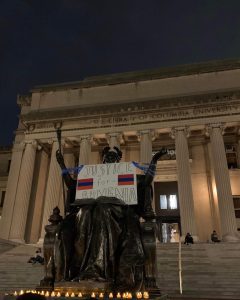
The Armenian Center at Columbia began in 1976 when a group of prominent members of the Armenian community decided to raise enough money to establish Armenian Studies on a permanent basis in the University’s curriculum. By 1979 that goal was accomplished and the Gevork M. Avedissian Chair of Armenian history and Civilization was established. Since 1979, courses in Armenian language, history and literature have been provided for students preparing for M.A., M.Phil and Ph.D. degrees in Armenian Studies and in other fields.
- The Krikor and Clara Zohrab Scholarship Fund, which provides fellowships to graduate students specializing in Armenian subjects.
- The Acopian Library Fund, which provides funding for the acquisition and cataloguing of a permanent Armenian library collection.
- The Fesjian Fund for Academic Publications, which provides for the publication of texts and scholarly books.
The Armenian Center at Columbia University and the department of Middle Eastern, South Asian, and African Studies at Columbia University regularly host a part-time Nikit and Eleanora Ordjanian Visiting Professor in Armenian Studies. The Ordjanian Visiting Professor teaches one undergraduate-level course in Armenian history, literature, art, or related areas of Armenian culture, and participates in public outreach programs related to Armenian Studies.
Applications are available each summer to teach a course the following Spring semester. The department invites applications from scholars with a PhD in the Humanities or Social Sciences whose focus is Armenian Studies. Interested candidates will be asked to submit a CV, syllabus of the course to be taught, and teaching evaluations.
Applicants propose their own course related to Armenian Studies. Successful courses are typically interdisciplinary and/or address Armenian experiences from a global perspective. Recent courses taught by the Ordjanian Visiting Professor include:
- Geography as World-Writing (Nareg Seferian, Spring 2026)
This course is about space and power. If “geography” is literally “world-writing”, then who is doing the writing, how, and why? Where is the line (the border!) between neutral, descriptive writing about the world and agenda-driven, ascriptive writing upon the world? Moreover, who is the reader of the so-written world? How and why is it to be read? This course invites students to think more deeply about those questions, taking on concepts and categories from the literature of geography, political geography, and geographical imaginations, as well as classical geopolitics and critical geopolitics. Various cases will inform the material of this course – the United States, China, India, Serbia, Senegal, Kenya, and the Middle East more broadly, with some emphasis on Armenia and Azerbaijan and the conflict over Artsakh/Nagorno-Karabakh. This course is designed to be a highly interactive semester-long engagement, based partly on texts and partly on visual discourse, with significant student-designed components. By the end of this course, students will become familiar with a number of analytical thinking tools related to geography, space and place, and power dynamics alongside substantial information on the cases examined.
- Leaving the Ottoman Empire: Ottoman Americans (Nora Lessersohn, Spring 2025)
This course will examine the experience of Ottoman American communities before, during, and after their migration to the United States, with a particular focus on Ottoman Armenians pre- and post-genocide. Through close readings of the scholarship on Ottoman Armenian, Turkish, Jewish, Arab, and Greek immigration, we will ask: what global forces compelled Ottoman journeys to America (e.g. economic opportunity, Christian imperialism, state-sponsored violence, interethnic strife)? And what ideologies informed the way these migrants were received in a new country (e.g. nativism, nationalism, Orientalism, philhellenism)? In answering these questions and raising new ones, we will also aim to understand how Ottoman American immigration stories both fit into and challenge the existing scholarship on “American immigration” as well as race, whiteness, and citizenship studies. Throughout the course, we will pay special attention to the experience of Ottoman American immigrants in New York City through field trips, museums, and other primary and secondary source materials.
- Armenians in the Modern World (Cevat Dargin, Spring 2024)
This course provides an introductory overview of modern Armenian history, spanning from the 19th century when Armenians lived across the Ottoman, Iranian, and Russian empires up to the present. It covers key historical events, including Ottoman reforms, Armenian revolutionary movements, the Armenian Genocide, periods of independence, Soviet rule, and the emergence of the Republic of Armenia in 1991. While the history of modern state in Armenian experience is a crucial aspect of the course, it also places a substantial focus on understanding Armenians as an intersectional community crossing imperial, national, and regional boundaries and belongings. The course employs innovative methods, primary sources, and digital materials to provide a comprehensive understanding of Armenian history and culture in a global context.