

RECENT BOOKS

Europe and its Shadows by Hamid Dabashi
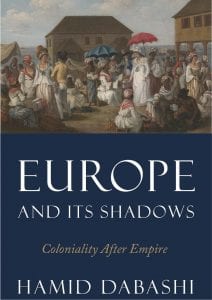
Europe has long imagined itself as the centre of the universe, although its precise geographical, cultural and social terrains have always been amorphous. Exploring the fear and fascination associated with the continent as an allegory, Hamid Dabashi considers Europe to be a historically formed barricade against the world. Frantz Fanon’s assessment that ‘Europe is literally the creation of the Third World’ is still true today; but in more than one sense for the colonial has always been embedded in the capital, and the capital within the colonial. As the condition of coloniality shifts, so have the dividing lines between coloniser and colonised, and this shift calls for a reappraisal of our understanding of nationalism, xenophobia and sectarianism as the dangerous indices of the emerging worlds. As the far-right populists captivate minds across Europe and Brexit upsets the balance of power in the European Union, this book, from a major scholar of postcolonial thought, is a timely and transformative intervention.
Review
(Walter D. Mignolo, author of ‘The Darker Side of Western Modernity: Global Futures, Decolonial Options’)
(Nelson Maldonado-Torres, author of ‘Against War: Views from the Underside of Modernity’)
(Souleymane Bachir Diagne, author of ‘Postcolonial Bergson’)
Reforming Modernity by Wael Hallaq
Reforming Modernity is a sweeping intellectual history and philosophical reflection built around the work of the Morocco-based philosopher Abdurrahman Taha, one of the most significant philosophers in the Islamic world since the colonial era. Wael B. Hallaq contends that Taha is at the forefront of forging a new, non-Western-centric philosophical tradition. He explores how Taha’s philosophical project sheds light on recent intellectual currents in the Islamic world and puts forth a formidable critique of Western and Islamic modernities.
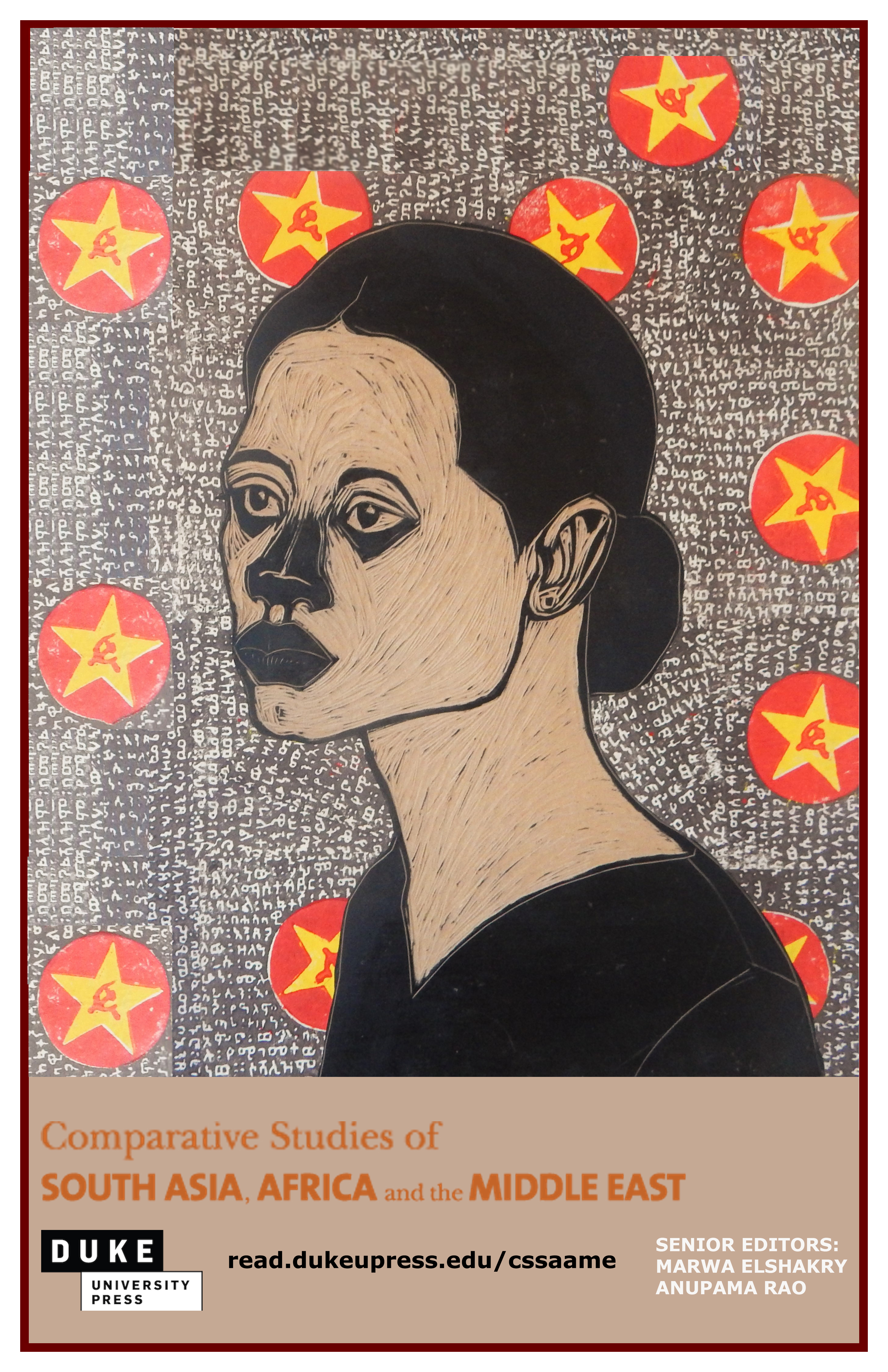
Comparative Studies of South Asia, Africa and the Middle East
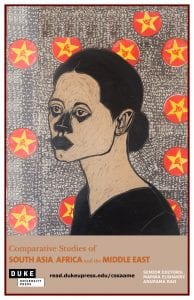
MESAAS is the host department for the journal Comparative Studies of South Asia, Africa and the Middle East (non-Columbia link). In 2012 Duke University Press appointed Timothy Mitchell and Anupama Rao as Senior Editors. The current Senior Editors of the journal are Marwa ElShakry and Anupama Rao.
CSSAAME brings region and area studies into conversation with a rethinking of theory and the disciplines. The journal attends to the specificity of non-Western social, political, and intellectual formations as these challenge the norms and assumptions of scholarly paradigms generated in the north Atlantic.
The editorial board of the journal includes MESAAS members: Partha Chatterjee, Mamadou Diouf and Elleni Centime Zeleke. A number of other Columbia faculty serve as members of the editorial board or as contributing editors
Graduate students in MESAAS and other Columbia Departments serve as editorial assistants for the journal. They also produce an online journal, Borderlines , in association to CSSAAME.
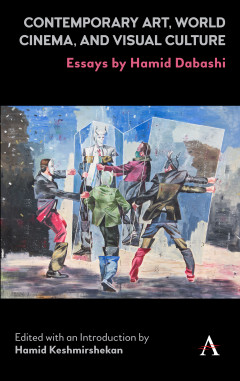
Anthem Press publishes Contemporary Art, World Cinema, and Visual Culture essays by Hamid Dabashi
Contemporary Art, World Cinema, and Visual Culture: Essays by Hamid Dabashi is a collection of writings by the acclaimed cultural critic and scholar. A thorough Introduction rigorously frames chapters and identifies in Dabashi’s writings a comprehensive approach, which forms the criteria for selecting the essays for the volume. The Introduction also teases out of these essays the overarching theme that holds them together, the manner they inform a particularly critical angle in them and the way they cohere. This Introduction dwells on the work of one scholar, public intellectual and theorist of modern and contemporary arts to extrapolate more universal issues of concern to art criticism in general. These scattered materials and their underlying theoretical and critical logic are a unique contribution to the field of modern and contemporary arts.
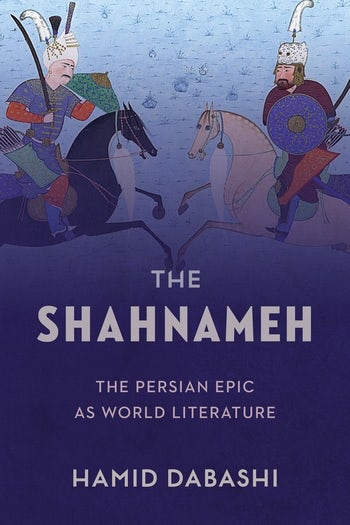
The Shahnameh: The Persian Epic as World Literature by Hamid Dabashi
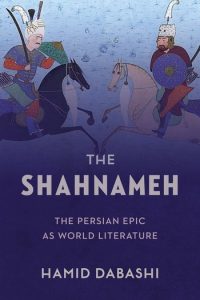
The Shahnameh, an epic poem recounting the foundation of Iran across mythical, heroic, and historical ages, is the beating heart of Persian literature and culture. Composed by Abu al-Qasem Ferdowsi over a thirty-year period and completed in the year 1010, the epic has entertained generations of readers and profoundly shaped Persian culture, society, and politics. For a millennium, Iranian and Persian-speaking people around the globe have read, memorized, discussed, performed, adapted, and loved the poem.
In this book, Hamid Dabashi brings the Shahnameh to renewed global attention, encapsulating a lifetime of learning and teaching the Persian epic for a new generation of readers. Dabashi insightfully traces the epic’s history, authorship, poetic significance, complicated legacy of political uses and abuses, and enduring significance in colonial and postcolonial contexts. In addition to explaining and celebrating what makes the Shahnameh such a distinctive literary work, he also considers the poem in the context of other epics, such as the Aeneid and the Odyssey, and critical debates about the concept of world literature. Arguing that Ferdowsi’s epic and its reception broached this idea long before nineteenth-century Western literary criticism, Dabashi makes a powerful case that we need to rethink the very notion of “world literature” in light of his reading of the Persian epic.
Columbia University Press publishes Restating Orientalism by Wael Hallaq
In this landmark theoretical investigation, Wael B. Hallaq reevaluates and deepens the critique of Orientalism in order to deploy it for rethinking the foundations of the modern project. Refusing to isolate or scapegoat Orientalism, Restating Orientalism extends the critique to other fields, from law, philosophy, and scientific inquiry to core ideas of academic thought such as sovereignty and the self. Hallaq traces their involvement in colonialism, mass annihilation, and systematic destruction of the natural world, interrogating and historicizing the set of causes that permitted modernity to wed knowledge to power. Restating Orientalism offers a bold rethinking of the theory of the author, the concept of sovereignty, and the place of the secular Western self in the modern project, reopening the problem of power and knowledge to an ethical critique and ultimately theorizing an exit from modernity’s predicaments. A remarkably ambitious attempt to overturn the foundations of a wide range of academic disciplines while also drawing on the best they have to offer, Restating Orientalism exposes the depth of academia’s lethal complicity in modern forms of capitalism, colonialism, and hegemonic power.
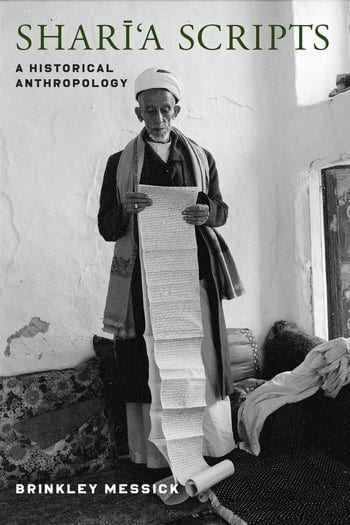
Columbia University Press publishes Shari’a Scripts by Brinkley Messick
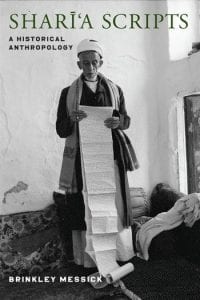
A case study in the textual architecture of the venerable legal and ethical tradition at the center of the Islamic experience, Sharīʿa Scripts is a work of historical anthropology focused on Yemen in the early twentieth century. There—while colonial regimes, late Ottoman reformers, and early nationalists wrought decisive changes to the legal status of the sharīʿa, significantly narrowing its sphere of relevance—the Zaydī school of jurisprudence, rooted in highland Yemen for a millennium, still held sway.
Brinkley Messick uses the richly varied writings of the Yemeni past to offer a uniquely comprehensive view of the sharīʿa as a localized and lived phenomenon. Sharīʿa Scripts reads a wide spectrum of sources in search of a new historical-anthropological perspective on Islamic textual relations. Messick analyzes the sharīʿa as a local system of texts, distinguishing between theoretical or doctrinal juridical texts (or the “library”) and those produced by the sharīʿa courts and notarial writers (termed the “archive”). Attending to textual form, he closely examines representative books of madrasa instruction; formal opinion-giving by muftis and imams; the structure of court judgments; and the drafting of contracts. Messick’s intensive readings of texts are supplemented by retrospective ethnography and oral history based on extensive field research. Further, the book ventures a major methodological contribution by confronting anthropology’s longstanding reliance upon the observational and the colloquial. Presenting a new understanding of Islamic legal history, Sharīʿa Scripts is a groundbreaking examination of the interpretative range and historical insights offered by the anthropologist as reader.