

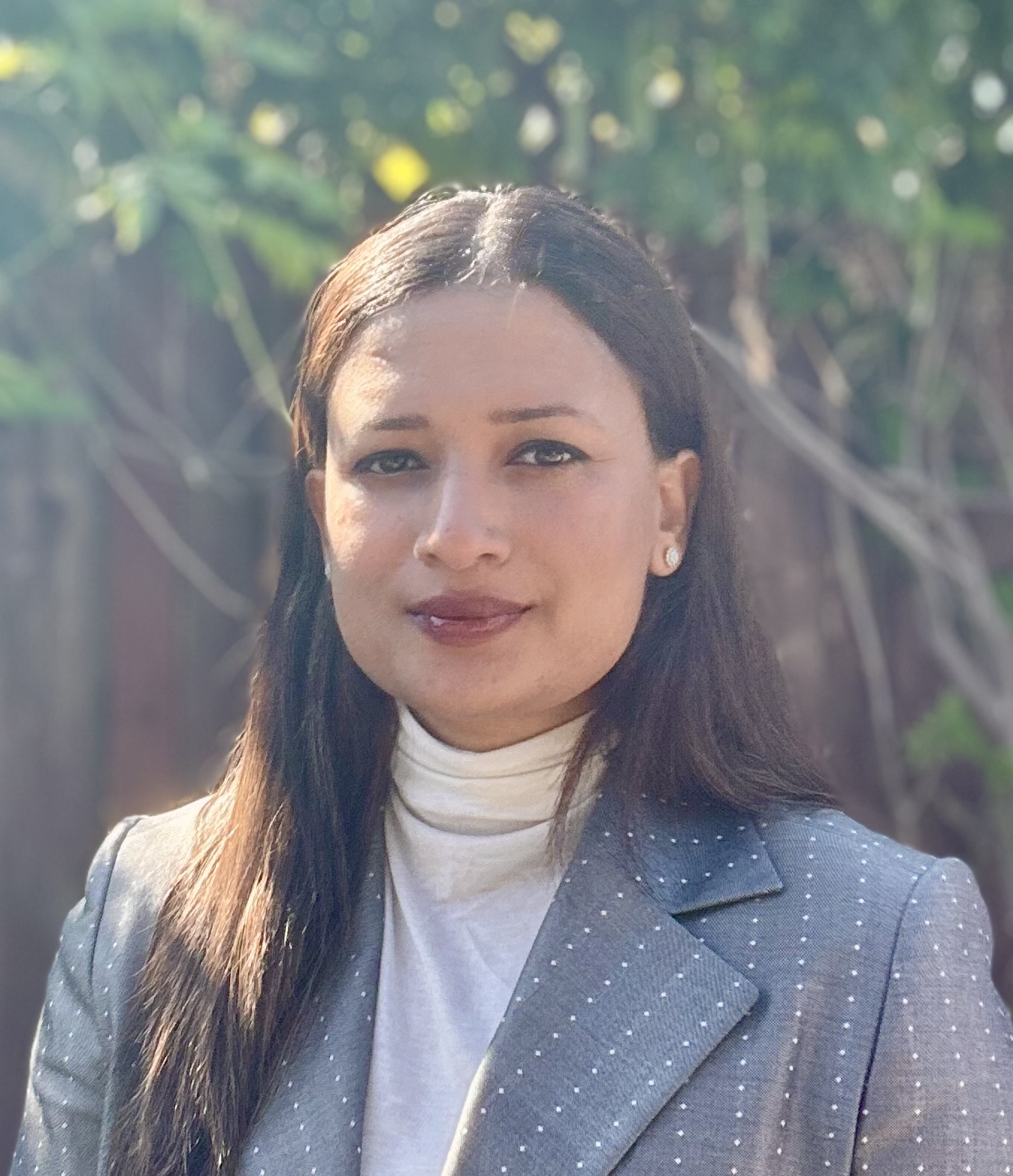
Shaunna Rodrigues
Core Lecturer in Contemporary Civilization, Columbia University
Shaunna’s research examines the importance of knowledge, progress and self-respect to political life. Her work examines how political communities justify democratic self-rule, legal authority, and political legitimacy after empire, and how architectures of knowledge and technology continue to shape those justifications today. She is interested in Comparative Politics, International Relations, Political Theory, and their impact on Public Administration and Political Economy.
Her research and teaching are guided by an overarching question: how can political and ethical frameworks sustain legitimacy in plural and technologically mediated societies? To answer it, she connects the history of philosophy with the study of law, comparative religion, linguistic innovation, the emergence of 20th century democracies, and Artificial Intelligence.
Across these domains, her work traces the entanglement between modern classification/categorization, the dream of decolonial constitutionalism, democratic knowledge formation, the ethics of power, the progressive realism of trade, and the translation of the promise of dignity into self-respect.
Shaunna’s research has been supported by the Andrew W. Mellon Foundation, Columbia University’s Institute for Religion, Culture, and Public Life, and the Columbia Core Curriculum.
Research
Shaunna’s first book project, If Arguments Converge: Knowledge, Self-Respect, and the Architecture of Democracy introduces two major methodological experiments to study how sovereign communities reconstruct political legitimacy in the aftermath of modern empires.
The book argues that modern political life cannot be understood without recognizing how the architecture that modern empires used to categorize the world came to be dismantled, contested, and reconstituted by 20th century thought, administrative innovation, and institutions. It situates nationalism, constitutionalism, and digital/computational progress in the knowledges established by new democracies between 1920-2025, arguing that these knowledges are crucial to intelligibility, progress, and self-respect.
In doing so, it shows that decolonization not only opposed empire, but also redefined the moral, ethical and epistemic bases of modern politics, offering plural criteria for reason, advancement, and human dignity after empire.
Her publications can be found here. She can be contacted at sr3328@columbia.edu
Shaunna’s second book project explores the relevance of South Asia to global computational supply chains. Approaching the question of computation through international and comparative politics, as well as through the ethical worldviews of South Asia, the work tentatively titled The Knowledge of Structures Solution, explores how and why educational innovations introduced in India towards the end of empire shape algorithmic systems that transform classificatory logics of empire.
This research explores how digital infrastructures reshape various bases of legitimacy by determining whose knowledge counts, which lives are visible, and how rights are operationalized. Through this work, she seeks to demonstrate the centrality of new democratic knowledge, and the relevance of equality to progress shaped by Artificial Intelligence.
Teaching
At Columbia University, Shaunna teaches the Core Curriculum’s Contemporary Civilization, where she introduces students to foundational texts in political, moral, and religious thought from antiquity to modernity. Her teaching integrates canonical and non-Western traditions, encouraging students to examine how epistemic, teleological and ontological questions have been posed and answered across different contexts.
She has also taught Gandhi and His Interlocutors, a Columbia Global Core course that explores the philosophical, political , and economic debates that made Gandhi, and his numerous global interlocutors symbols of humanity and civil disobedience across the 20th and 21st centuries.
She has also taught Anticolonialism, Constitutionalism, and Democracy in South Asia, which included readings by scholars on, from, and by all countries in the region, to study democratization in South Asia after the collapse of modern empires in the region. Her teaching invites students to link ideas of political authority, equality, citizenship to pressing political and ethical questions of the present.
Education
Shaunna holds a B.A. in Economics from St. Stephen’s College, New Delhi; an M.A. and M.Phil. in Political Studies from Jawaharlal Nehru University, New Delhi; and an M.A., M.Phil., and Ph.D. in Middle Eastern, South Asian, and African Studies from Columbia University.
She was a Graduate Core Preceptor in Contemporary Civilization from 2021-2022, an Early Career Postdoctoral Fellow at Columbia from 2023–2024 before joining the faculty at Columbia University as a Core Lecturer in Contemporary Civilization.
Digital Projects
Shaunna runs multiple digital projects under her digital pseudonym @simhashaunna. Inspired by the lions pose (simhāsanā), and its relevance to numerous societies around the world, she uses her highly limited knowledge to undertake everyday resistance to the fixities of civilizationisms, the conservatism of laws, and the relevance of text to those who are intelligent with numbers.
Contact and Website
@simhashaunna on Instagram.
@shaunnaroder on X.
Queries about Shaunna can also be sent to MESAAS, Columbia University.